
Wine Culture Magazine
Wine Culture Magazine
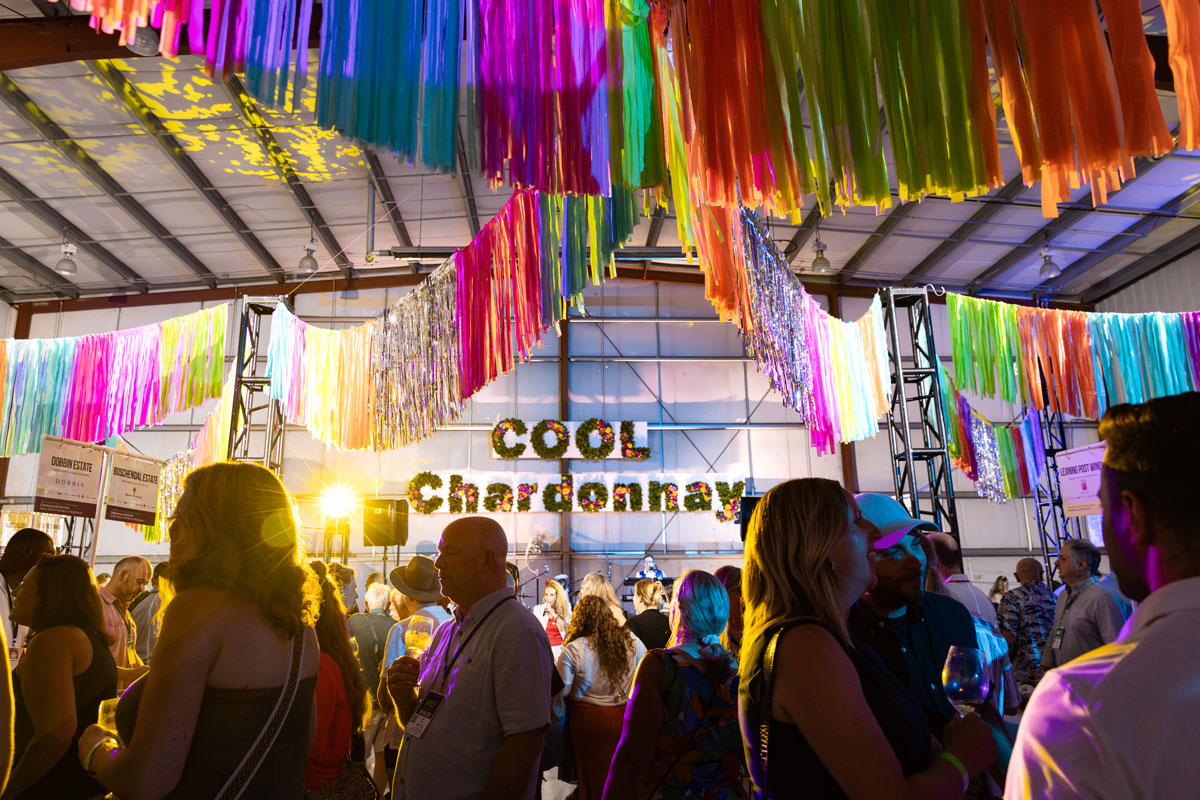
At i4C’s Friday Night Flights, a spirited crowd gathers in an airplane hangar for an evening of sipping and dancing. Photo courtesy of International Cool Climate Chardonnay Celebration
We all know that person. Heck, you might even be that person, the one whose taste in wine runs ABC: “Anything but Chardonnay.” But like the backlash against Merlot in the noughties, there’s a misunderstanding at the heart of the ABC movement.
In 2004, the movie Sideways featured a wine snob named Miles who turned against Merlot because he associated it with his wife and the heartbreak of their painful divorce. But viewers took his famous line “I am NOT drinking any fucking Merlot!” to mean they shouldn’t either. Too bad; they’d be missing out on some of the world’s greatest wines, like those from Château Petrus, Duckhorn Vineyards and, closer to home, CheckMate.
Similarly, when people ask for “anything but Chardonnay,” it’s likely not the grape they hate, it’s a certain style of wine made from it, that big, buttery, boozy, over-oaked California style that was so popular in the 1990s. What they—and maybe you—don’t realize is that it isn’t really a thing any more.
Sure, there’s still the occasional oak bomb out there, but mostly we’re seeing a shift to cooler-climate styles of Chardonnay: lean, balanced, elegant, lower in alcohol, higher in acid. It’s the kind of Chardonnay we tend to grow in Canada, and the kind of Chardonnay that brought me to the International Cool Climate Chardonnay Celebration in Niagara back in July.
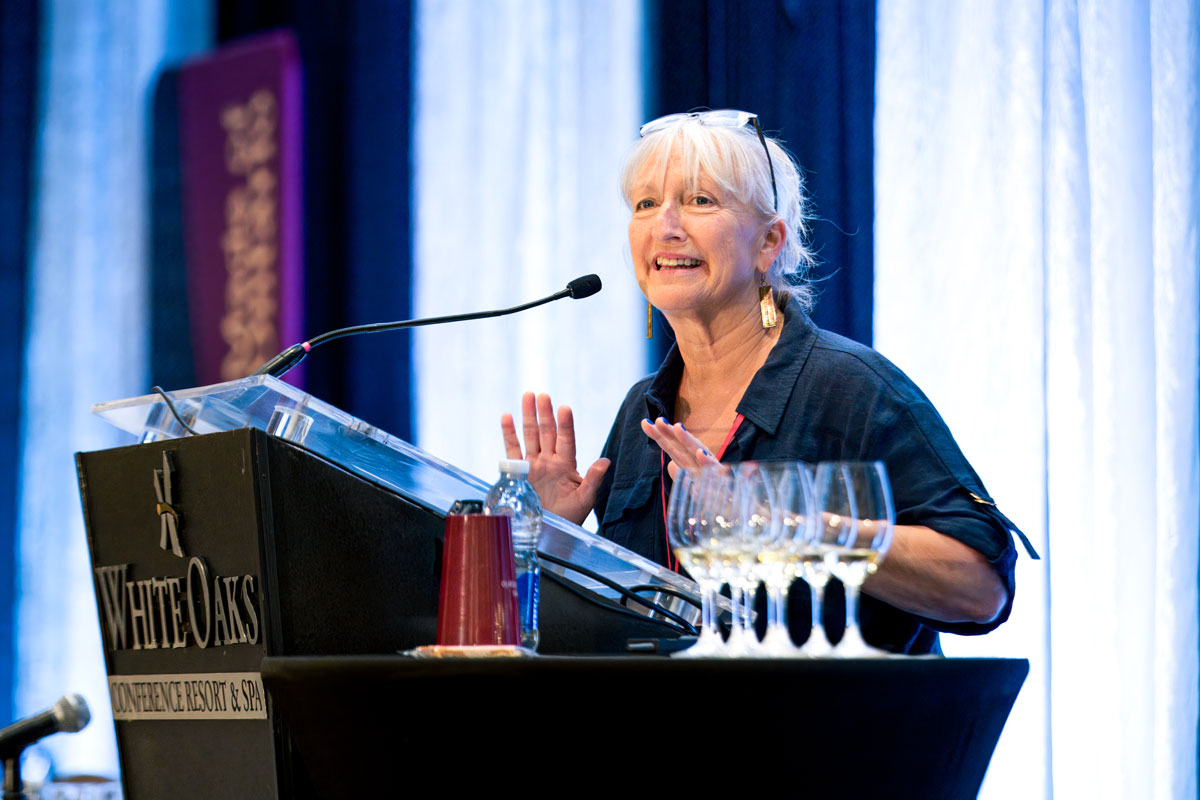
i4C keynote speaker Véronique Rivest tells the industry crowd: “When people think cool climate, they think of Canada.” Photo courtesy of International Cool Climate Chardonnay Celebration
i4C, as the cool kids call it, has been held yearly since 2011, bringing Chardonnay producers from around the world to Niagara to raise a glass, taste some wine, enjoy good food and talk, not just about Chardonnay, but about the state of the wine world in general.
With events like Friday Night Flights (a lively tasting event held in an airplane hangar) and the closing night gala set in a vineyard (this year’s event was held at Peller Estates), it’s as much a fun consumer event as it is a serious wine industry one.
The event opens with the School of Cool, an industry-forward session featuring important voices in the wine world. This year’s keynote speaker was the Montreal-based sommelier, wine writer and educator Véronique Rivest, twice named Canada’s Best Sommelier (2006 and 2012) and second best in the world (2013), owner of Soif Bar à Vin and sommelier for Air Canada. She had some thoughts about Chardonnay and, especially, Canadian Chardonnay.
“As demand increases for cool climate wines—generally lower alcohol, higher acidity—we have an enormous advantage. When people think cool climate, they think of Canada,” she said.
“Perhaps cool climate is as much about character as it is about weather. Perhaps it’s about the way wine carries freshness, tension and life. And, of course, there’s not just one expression of Canadian Chardonnay. Our wine regions are thousands of kilometres apart, with different climates, different soils and different traditions—almost all of them shaped in one way or another by water.
“That diversity is one of our greatest strengths,” she added, noting that we produce “not one Canadian Chardonnay, but many Canadian Chardonnays.”
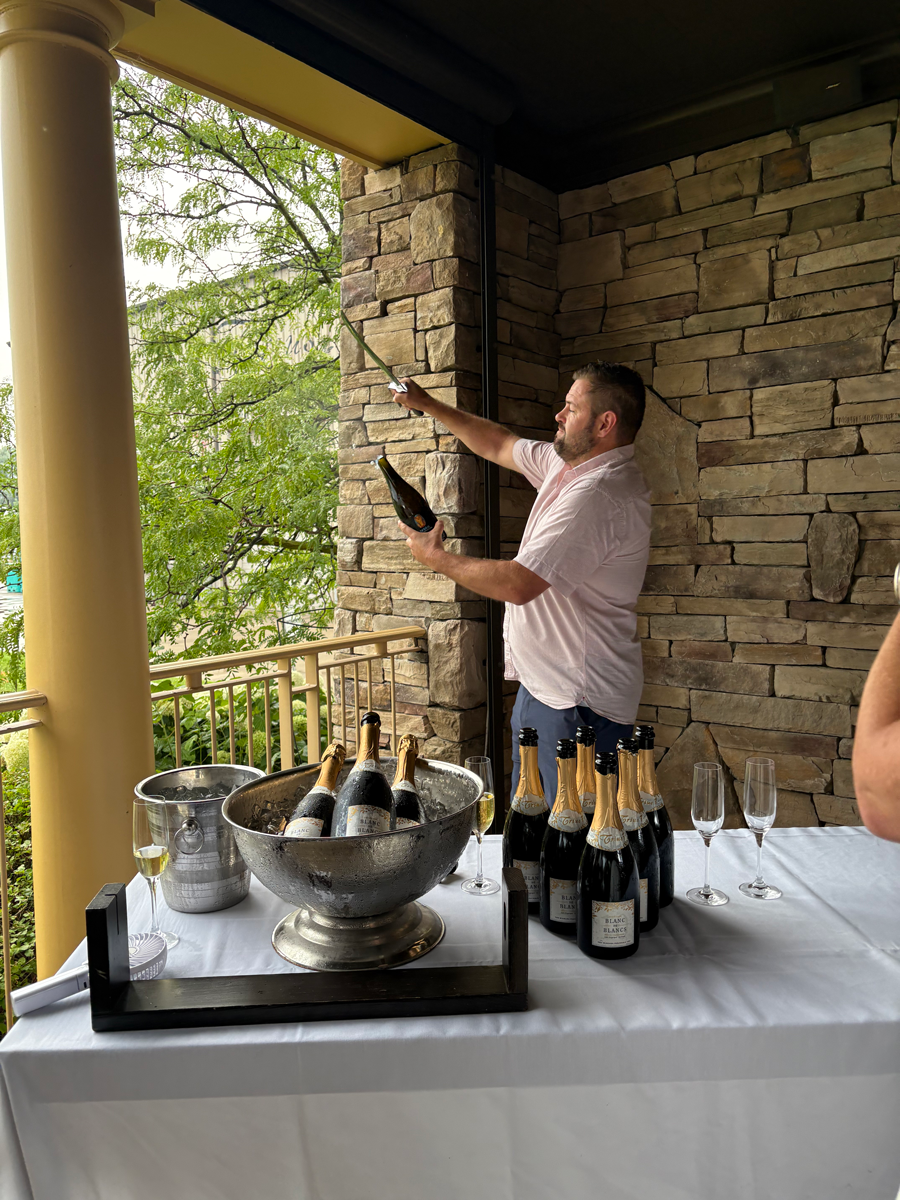
Dave Paterson, winemaker at Tantalus Vineyards, sabres a bottle of bubble at Trius Winery during i4C. Joanne Sasvari photo
Why all this fuss about Chardonnay, of all the grapes?
It is, for one thing, the most widely planted of all the white grapes, grown in just about every wine region around the world. Chardonnay not only thrives in almost any terroir, but is remarkable in the way it expresses each one.
Consider the crisp, mineral-driven Chardonnays at Leaning Post Wines on the Niagara Bench, a piece of land that owner Ilya Senchuk describes as “just this big, limestone shelf. You can think of it as a sideways Burgundy.”
Compare that to the stone-fruit flavours and peach-blossom aromas of many Chardonnays from the sunny Okanagan Valley, where vineyards are surrounded by orchards and lakes, or the citrus-and-saline notes of Chards from Vancouver Island, where the vineyards are swept by cool breezes from the Salish Sea—or, if we’re looking to international styles, sun-soaked, buttery California Chardonnay compared to flinty Chablis from Burgundy.
At the same time, much as Chardonnay is great for expressing terroir, it’s also fun for winemakers to play with. It responds well to all the winemaker’s tricks, from malolactic fermentation (which makes wine feel creamy and taste buttery) to secondary fermentation (which adds bubbles) to oak aging (which softens the texture and adds notes such as vanilla, spice or coconut).
The problem is when winemakers go overboard with these techniques. As Senchuk says, “Oak is just the frame for the art. It’s not the art.” These days, winemakers aren’t chucking oak staves into tanks and barrels with quite the recklessness of the past. Instead, they are letting the terroir talk, and if they are using oak at all, it’s mainly to add balance and texture.
After all, the wines of Meursault in Burgundy use all the techniques to achieve their signature rich flavour: barrel fermentation, malolactic fermentation, lees contact, bâtonnage, oak aging. They are among the world’s most highly regarded and most expensive Chardonnays and nobody we know is saying, “Anything but Meursault.”
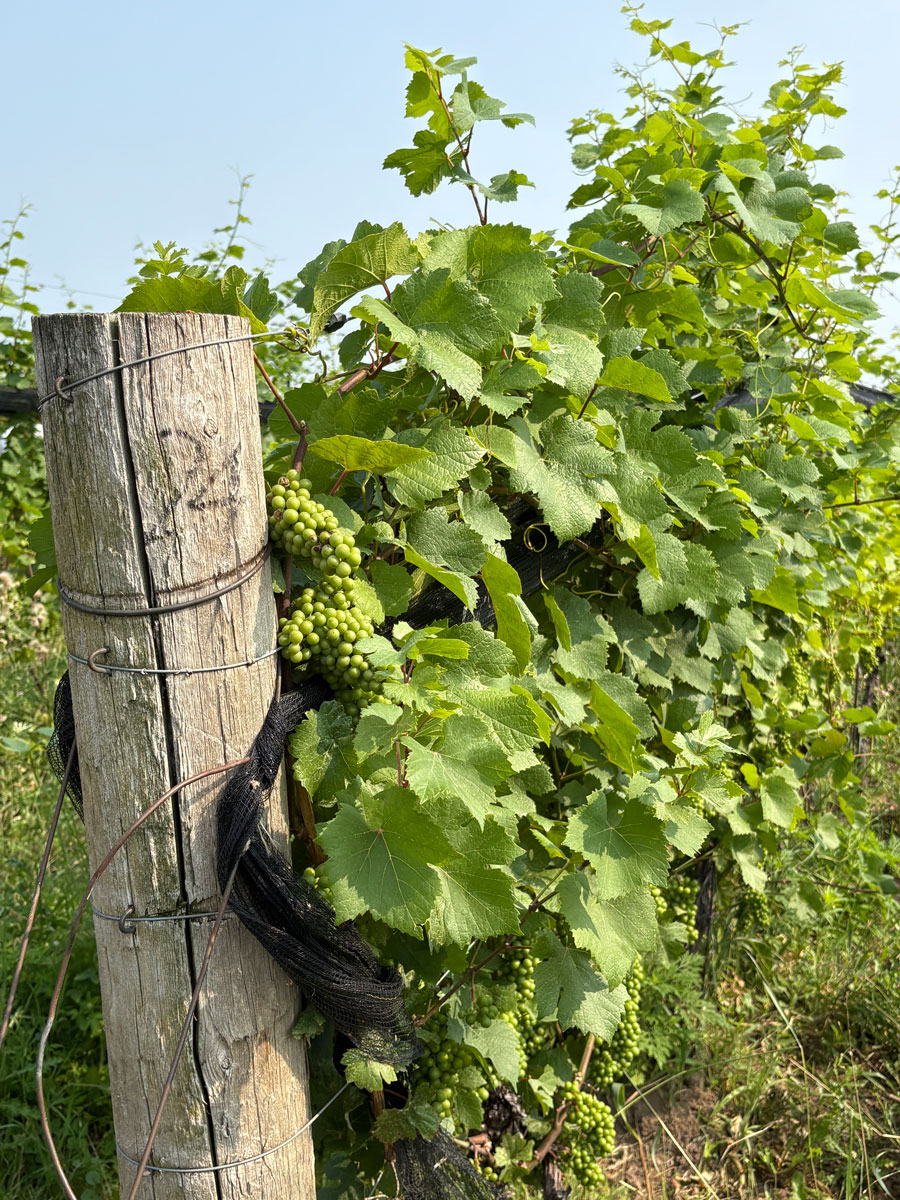
Chardonnay grapes bask in the sun at Leaning Post Wines in the Lincoln Lakeshore sub-appellation. Joanne Sasvari photo
In Niagara, I tasted dozens of Chardonnays in (almost) every style imaginable: flinty, minerally, buttery, creamy, fizzy, citrusy, floral, savoury. I tasted plenty of classic apple and pear notes and, occasionally, the subtlest hint of oak. I watched winemakers sabre sparkling Chardonnay in a vineyard in 37-degree heat and in a winery tower during a thunderstorm. I tasted Chardonnay on a farm and in an airplane hangar, under a pergola set amid the baby vines of a brand-new winery and at a fancy restaurant overlooking some of the region’s oldest vineyards.
I loved the way each Chardonnay had its own personality, the way it expressed so clearly where it was from and how it was made. I loved the way it connected Canada from coast to coast, yet remained distinctly regional, indeed, sub-regional. And I really loved that we have a party each year to celebrate this great grape.
As Rivest told the crowd at i4C, “Chardonnay just happens to be the world’s greatest translator of place—if we let it speak.”
She added: “Our great opportunity is telling better stories—telling our story, but in a way that connects with people. Because every great Chardonnay tells the story of a place. And that’s where Canadian Chardonnay has arrived: We’ve found our voice.”
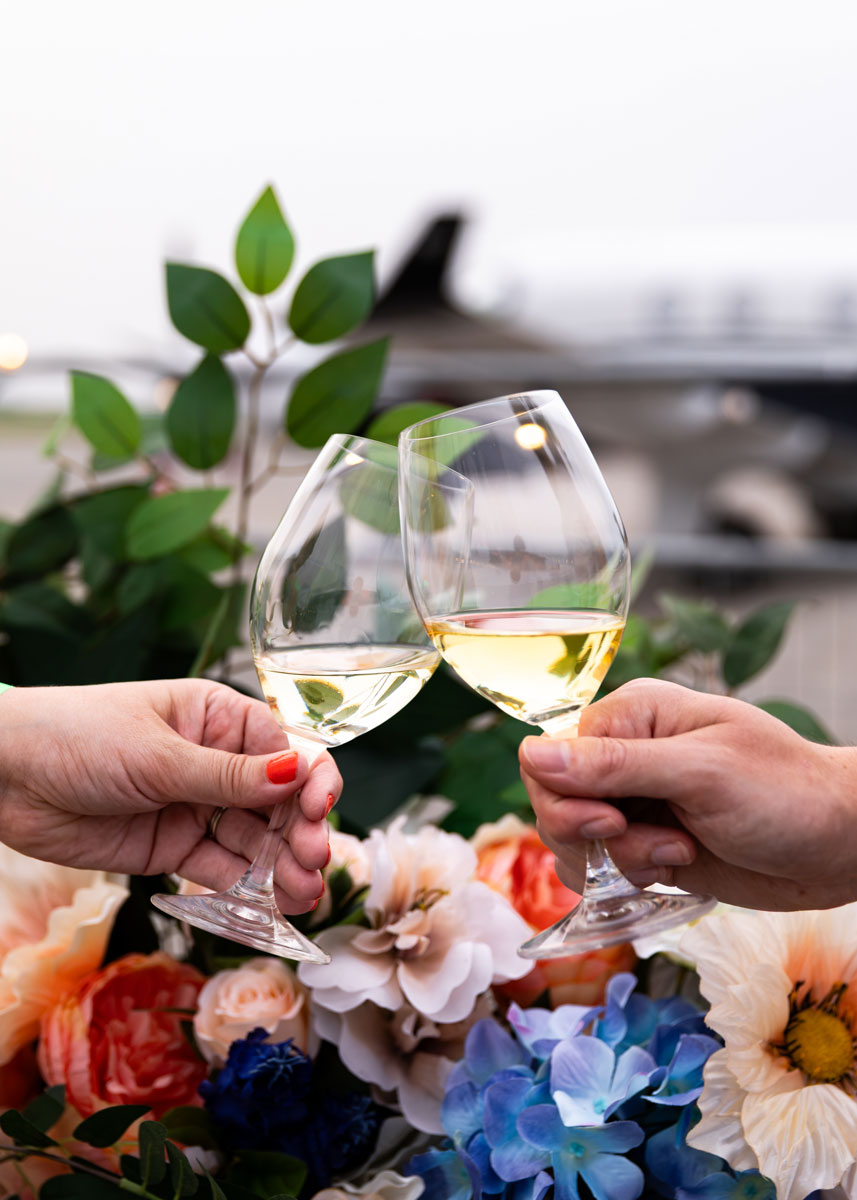
Chardonnay tells the story of a place better than any other grape—and isn’t that worth celebrating? Photo courtesy of International Cool Climate Chardonnay Celebration
The 2027 International Cool Climate Chardonnay Celebration will be held next July at various locations in Ontario’s Niagara region, including the host hotel, White Oaks Conference Resort and Spa. whiteoaksresort.com
For information and tickets, visit coolchardonnay.org and sign up for the newsletter to get the most recent updates.
Note that under recent changes to interprovincial trade rules, the Ontario wines below should be available for British Columbians to order online.
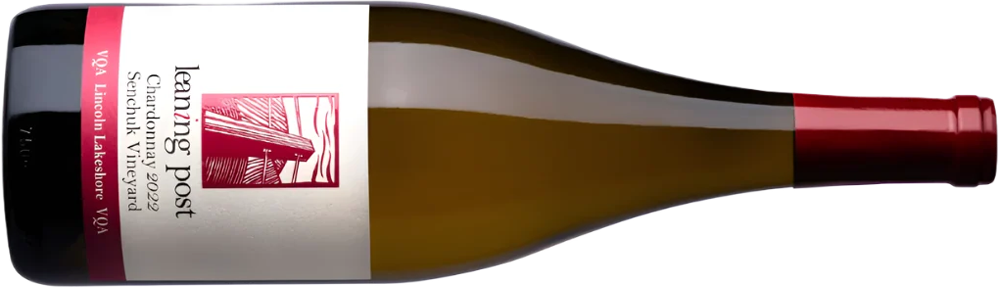
Leaning Post Senchuk Vineyard Chardonnay 2022
(Lincoln Lakeshore, Niagara Peninsula, $70)
Powerful yet delicate; wet stone, lemon curd, stone fruit, crème brûlée.
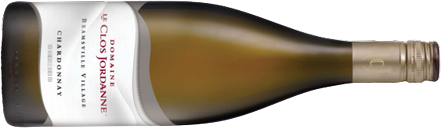
Le Clos Jordanne Beamsville Village Chardonnay 2023
(Beamsville Bench, Niagara Peninsula, Ontario, $27)
Golden apple, apricot, ripe melon, chamomile, chalky minerality.
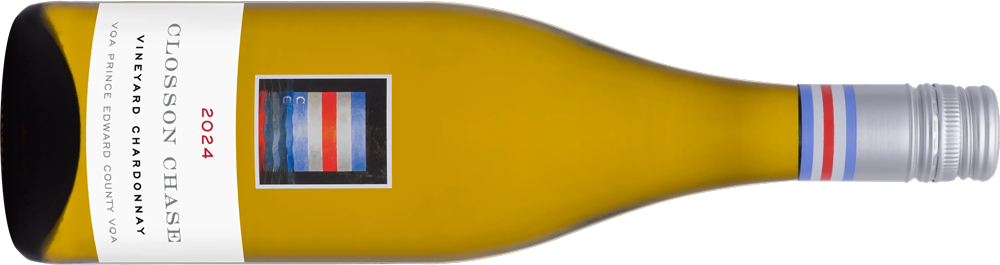
Closson Chase Vineyard Chardonnay 2024
(Prince Edward County, Ontario, $40)
White flowers, ripe apples, Bartlett pear, notes of nuts and spices.
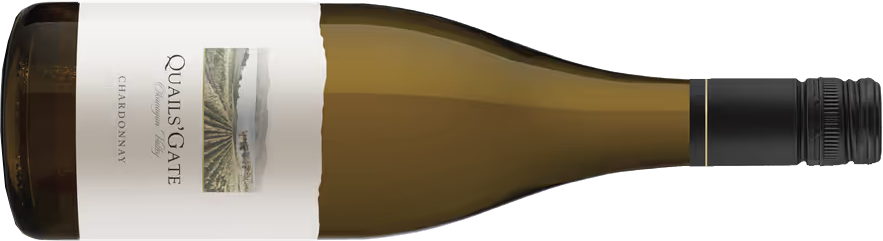
Quails’ Gate Chardonnay 2025
(Okanagan Valley, $28)
Bright, fresh, medium-bodied; apple, pear, apricot and lemon.
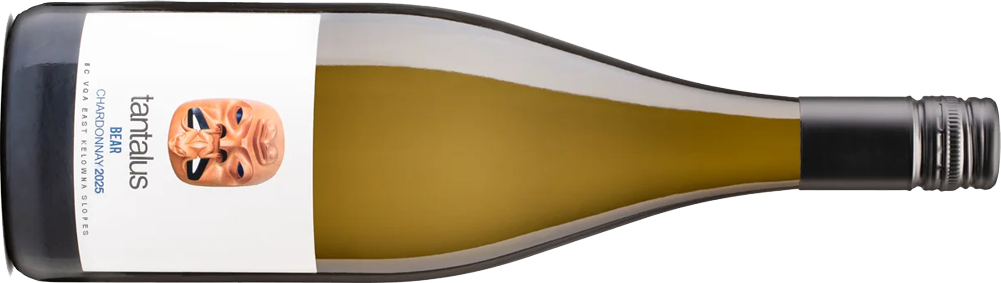
Tantalus Vineyards Bear Chardonnay 2025
(East Kelowna Slopes, B.C. VQA, $23.48)
Vibrant, layered, approachable; creamy citrus, peach, marzipan, sea breeze.
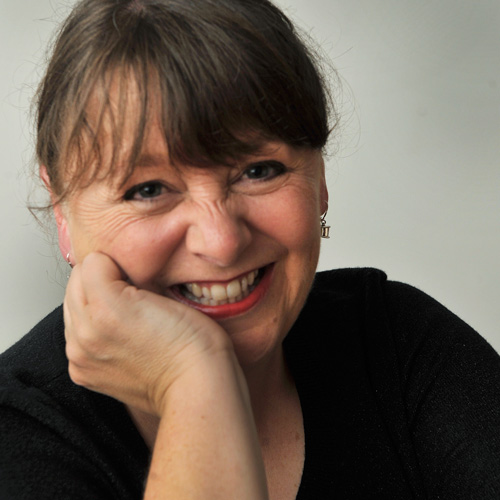
Joanne Sasvari is editor of Vitis and The Alchemist magazines. She also writes about food and drink for WestJet and Vancouver Sun, and is author of the Wickaninnish and Vancouver Eats cookbooks.
Joanne Sasvari is editor of Vitis and The Alchemist magazines. She also writes about food and drink for WestJet and Vancouver Sun, and is author of the Wickaninnish and Vancouver Eats cookbooks.
Copyright © 2026 - All Rights Reserved Vitis Magazine