
Wine Culture Magazine
Wine Culture Magazine
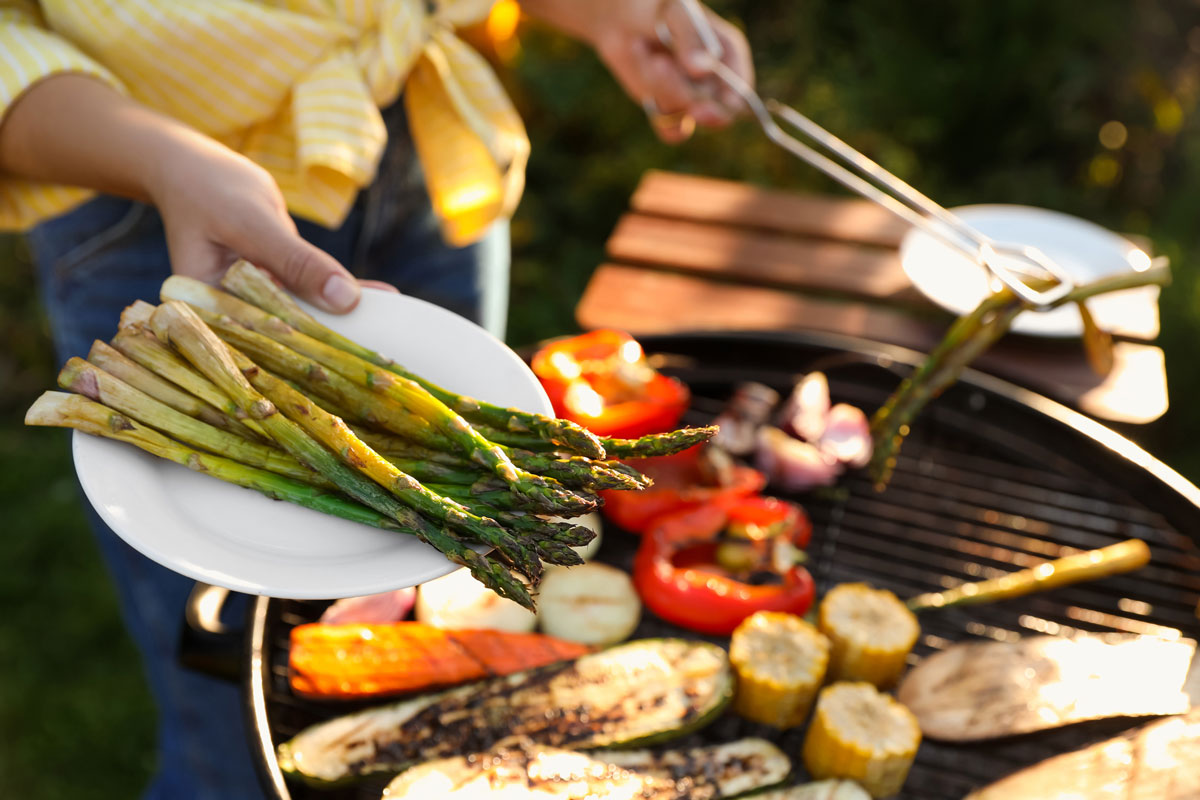
When asparagus is the star of the grill, grassy whites play a perfect supporting role. Other vegetables, though, may pair better with light reds. iStock/Getty Images Plus/Liudmila Chernetska photo
If you’re anything like me, the minute the weather gets warm enough and dry enough, I pretty much want to move outdoors, especially when it comes to cooking and eating. That means it’s time to fire up the grill for burgers, chicken skewers, cedar-planked salmon, slow-cooked ribs and all the veggies that are served with.
There is a school of thought that grilled foods should always go with beer, but wine can be a better companion in many ways, its fruit and acidity a perfect complement to smoke and char. But there are a couple of caveats.
Just like anything else, the general rules of pairing apply to grilled foods. It’s all about balancing and enhancing each other’s flavours. Remember: The weight and intensity of the wine should match that of the food; tannic wines clash unpleasantly with bold spices; and acidic foods need even more acidic wines, which also pair well with salty, fatty foods. The two factors that make grilled food more difficult to pair are the generous use of sauces, rubs and marinades, which can be overwhelmingly sweet, salty, spicy and sour all at once, and smoke, which adds powerful savoury notes that demand equally powerful wines.
In other words, what you may be pairing is a complex combination of sauce and smoke rather than the meat it’s slathered on.
If you are in doubt, you can’t go far wrong with sparkling wine or a light-bodied rosé—if you’re invited to a friend’s place, for instance, bringing a bottle of Champagne or B.C. bubble is never a bad idea. But here are some more specific pairing options for grilled foods.
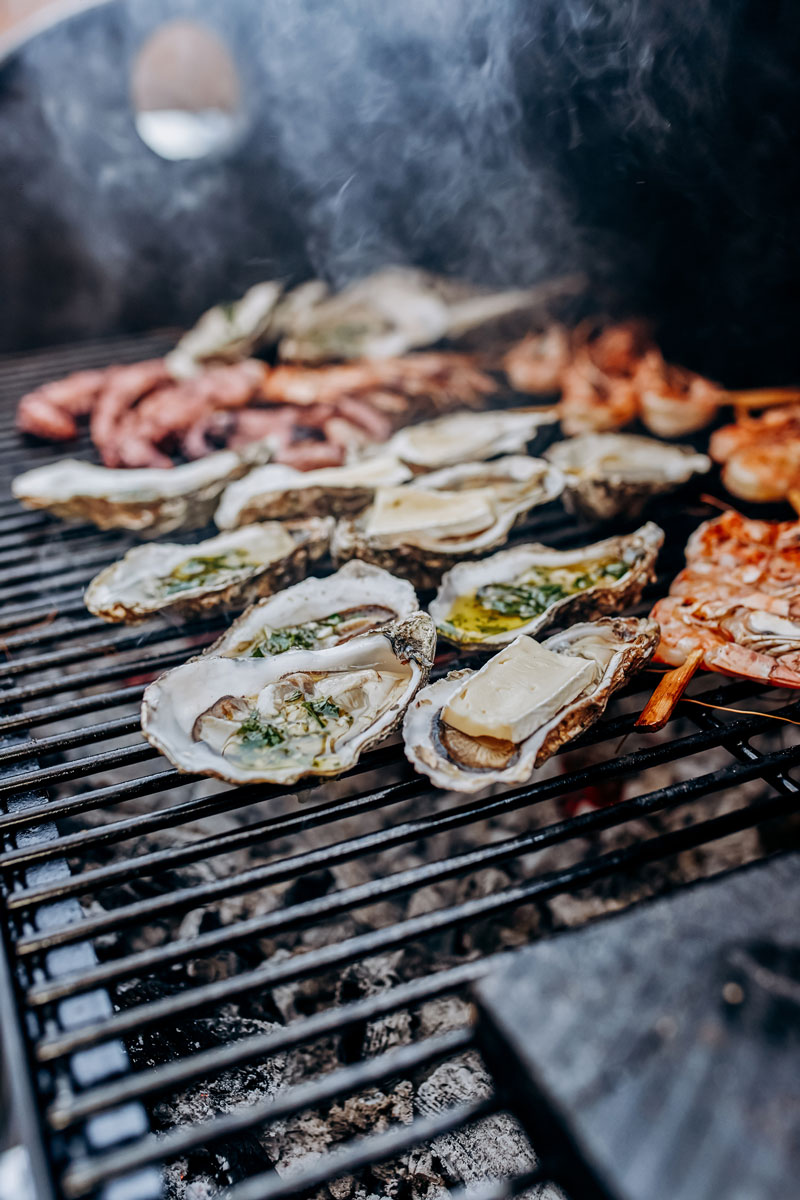
Serving oysters? You can’t go wrong with bubbles. iStock/Getty Images Plus/BONDART photo
Shellfish (oysters, clams, mussels, shrimp): Sparkling wine or higher-acid whites like Muscadet, dry Riesling, Pinot Gris.
Halibut and sablefish: Richer, but still fairly high-acid whites such as unoaked Chardonnay, Sauvignon Blanc or Albariño.
Grilled salmon: Light, low-tannin reds such as Pinot Noir or Gamay, or a dry rosé.
Smoked salmon: Higher-acid but richer-bodied whites to cut through the fat and complement the saltiness, such as sparkling wines, unoaked Chardonnay (Chablis) or Old World Sauvignon Blanc (Sancerre).
Asparagus: “Grassy,” higher-acid whites, such as Sauvignon Blanc, Grüner Veltliner, Pinot Grigio or Albariño.
Other vegetables (zucchini, eggplant, bell peppers, tomatoes): Earthier flavours pair well with savoury, higher-acid reds like Sangiovese (Chianti), Gamay or Cabernet Franc.
Chicken: Chardonnay or, depending on the sauces or marinade, a light, fruit-forward red such as Gamay.
Grilled pork (chop, tenderloin, skewer): Full-bodied Chardonnay, dry rosé or light, juicy reds such as Gamay or Pinot Noir.
BBQ pork (ribs or shoulder): Bold, high-acid, low-tannin reds, such as Merlot, Grenache, Cabernet Franc or Lambrusco.
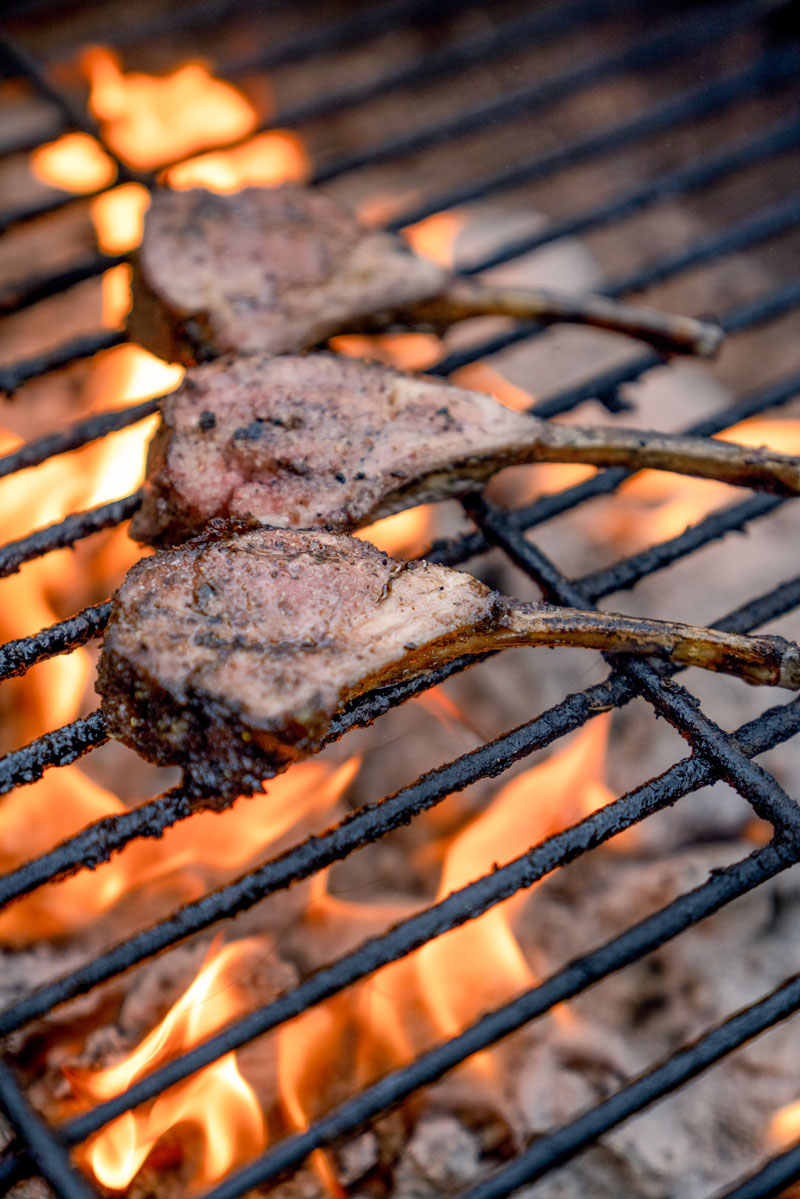
Grilled lamb cries out for the fruit and spice of Syrah and Grenache. E+/grandriver photo
Lamb: Fruit-forward, slightly spicy Syrah, Grenache and Syrah-Grenache blends.
Grilled beef (steak, kebabs): Bordeaux varieties (Merlot, Cabernet Sauvignon) and blends, or bold, savoury Italian reds such as Sangiovese (Chianti) and Nebbiolo (Barolo, Barbaresco).
BBQ beef (brisket): Big, fruity, not overly tannic reds such as New World Syrah , GSM blends or a full-bodied rosé.
Beef (burger): Juicy and not overly tannic red wines (Sangiovese, Syrah, Merlot, Cabernet Franc.
Sauces and Marinades: If you’d rather pair the flavour than the protein, consider these partners.
Thai/Vietnamese/Korean: off-dry Riesling, Gewürztraminer, fruit-forward rosé, sparkling wine.
Mediterranean/Middle Eastern: light, juicy reds (Pinot Noir, Gamay) or rich, slightly aromatic whites such as Rhône blends.
South Asian spices: juicy rosés, off-dry whites, light, fruit-forward reds.
Southern-style BBQ sauces and mops: juicy rosés, fruit-forward and low-tannin reds (Gamay, Grenache).
All that said, the most important thing to consider when pairing food and wine is to drink what you like. And if you are ever in doubt, it’s almost impossible to go wrong with rosé.

Joanne Sasvari is editor of Vitis and The Alchemist magazines. She also writes about food and drink for WestJet and Vancouver Sun, and is author of the Wickaninnish and Vancouver Eats cookbooks.
Joanne Sasvari is editor of Vitis and The Alchemist magazines. She also writes about food and drink for WestJet and Vancouver Sun, and is author of the Wickaninnish and Vancouver Eats cookbooks.
Copyright © 2026 - All Rights Reserved Vitis Magazine