
Wine Culture Magazine
Wine Culture Magazine

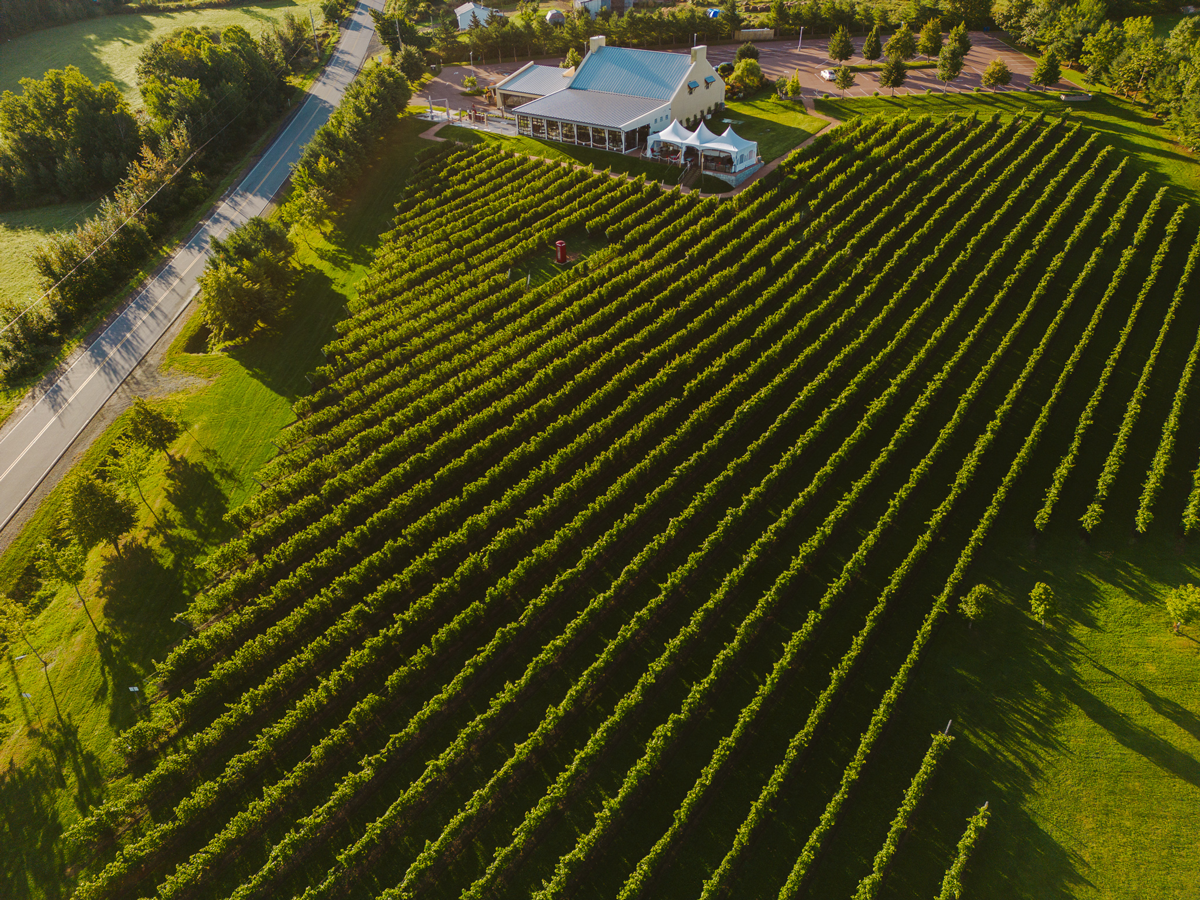
Magnetic Hill Winery near Moncton, N.B. Photo courtesy of Magnetic Hill Winery
One of my favourite home-entertaining hacks is to surprise guests with an elegant and fresh sparkling rosé that’s a perfect expression of the terroir found in Moncton, New Brunswick.
Folks in my Toronto-based kitchen are surprised, to say the least. But, to be fair to my pals, the news that roughly half of the province’s dozen wineries are using locally grown grapes to make first-rate wine has been slow to trickle out. Even many of the locals are in the dark. When I asked a restaurant owner in St. Andrews by-the-Sea about pairing his catch of the day with local wine, he said: “Well, we haven’t taken things that far.”
Fifteen years ago, the idea that you could make a high-quality wine from grapes in southeastern New Brunswick would have surprised even Moncton winemaker Zach Everett, the man responsible for the aforementioned delicious pink fizz, Magnetic Hill Winery’s Terroir Generator 2020 Sparkling Marquette.
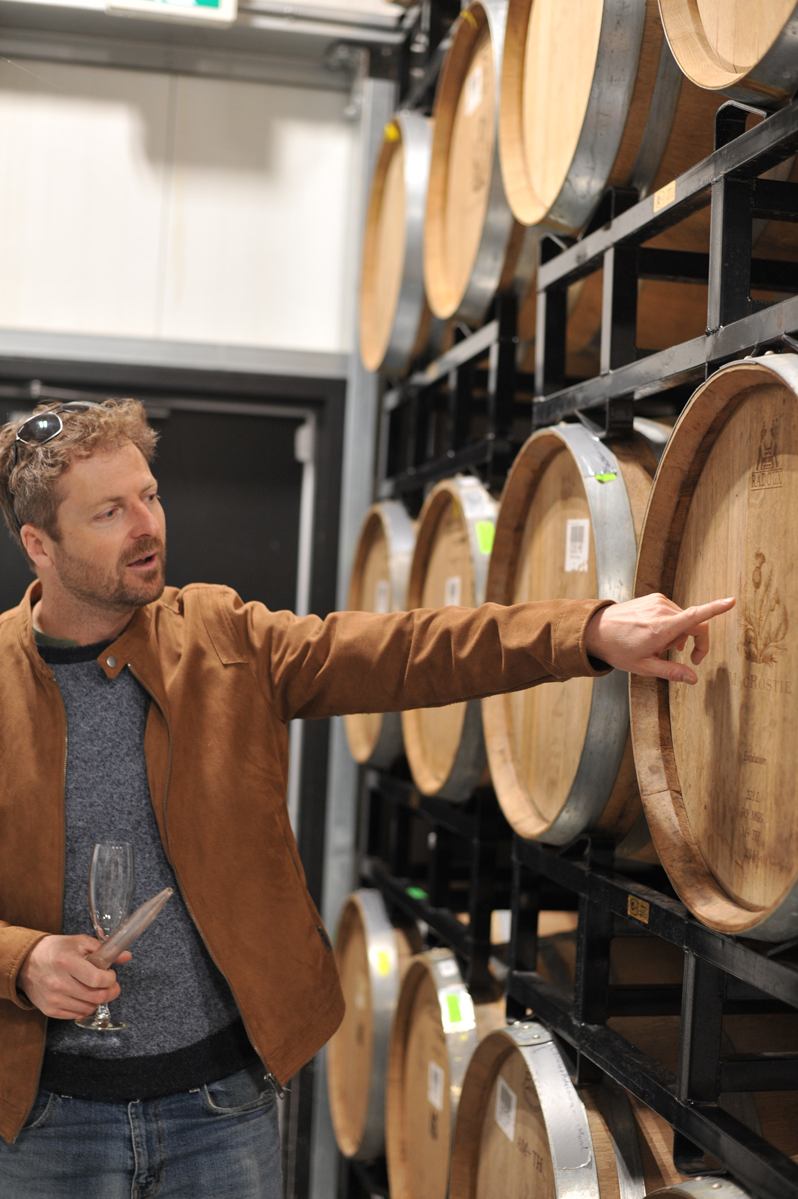
Zach Everett, owner and winemaker at Magnetic Hill Winery, is excited by the potential of hardy hybrid grapes in a region where the extreme climate makes it hard to grow vitis vinifera. Photo courtesy of Magnetic Hill Winery
“Originally our vision was that grapes didn’t survive here,” says Everett, who grew up on his parents’ nearby strawberry farm. “We promised ourselves we would never grow grapes, because the people who were trying were planting varieties that didn’t check all the boxes. We have a unique climate here with short summers and very cold winters that can go down to minus 30, so even things like Baco Noir and Marechal Foch don’t survive here.”
The Everett family established Magnetic Hill Winery as a fruit wine business 20 years ago, as a way to make the strawberry farm a more viable venture. Everyone was happy enough with the way the business was shaping up until Everett took a fateful trip to Germany, where a grape grower invited him to help with the harvest.
“It was one of those beautiful experiences where I didn’t have any expectations but, as I was picking grapes, I knew that’s what I wanted to do for the rest of my life,” he recalls. “I wanted to be a winemaker. So, I came back to Moncton and we had some fun conversations as a family.”
Luckett Vineyards in Nova Scotia’s Gaspereau Valley produces wines that are light, fresh and beachy, most of them based on hybrid varieties such as L’Acadie Blanc. Photo courtesy of Luckett Vineyards
All stories about cold-climate wine regions intersect with alarming news about global warming, but the successes Everett’s had at Magnetic Hill wouldn’t have been possible without pioneering work begun in 1943 by Wisconsin farmer Elmer Swenson. Although many others bred hybrids of European grapes and indigenous varieties before Swenson, this teetotalling hobbyist’s tireless efforts led to a body of hardy yet elegant cultivars, including “Edelweiss” and “Red Swenson,” which were released jointly with the University of Minnesota’s Grape Breeding and Oenology department.
Swenson, a.k.a. the “Father of Cold Climate Grape Growing,” did some of his work at U of M, but most of his inventions were born out of tinkering on the family farm in Osceola, Wisconsin, including one varietal, Osceola Muscat, that Everett thinks has a big future in New Brunswick. His own award-winning expression of it, The OC: Osceola by the Sea, is the province’s best-selling locally made wine.
“When I first tried working with Osceola, we did an orange wine and a sparkling, but to me, it’s a semi off-dry, age-worthy Riesling-style wine,” says Everett. “The grapes grow by the ocean and, when you stand in the vineyard, you see boats full of lobster 100 metres away.
“To me, that’s really the defining characteristic of what the future of wine in New Brunswick will be,” he continues. “It’s our beaches and our seafood and our wine.”
Cool-climate German viticulture might have provided Everett’s first inspiration for New Brunswick wine, but neighbouring Nova Scotia has given him the model that he thinks should be emulated to build the own province’s wine identity. Not only were Nova Scotia’s most popular wines light, fresh and beachy, its winemakers embraced hybrid grapes, despite the fact that they bear a stigma in some regions.
“I would say hybrids are really what got the industry started here in Nova Scotia,” says Geena Luckett of Gaspereau Valley’s Luckett Vineyards. “I always call L’Acadie Blanc our ‘hero grape,’ but most of our production consists of hybrids.”
Marquette, Osceola Muscat, Castel, Lucie Kuhlmann, Léon Millot, Marechal Foch and Cabernet Foch are all commonly used to make the province’s acclaimed wines, all obvious choices, she says, simply because they’re so much hardier than European grapes.
“Some hybrids that didn’t work elsewhere worked really well here, notably L’Acadie,” Luckett adds. “We’ve really proven a lot of people wrong. I would say that we’ve shown that hybrids really are fabulous producing grapes and they’re really unique, so there’s a bit of newfound excitement around them.”
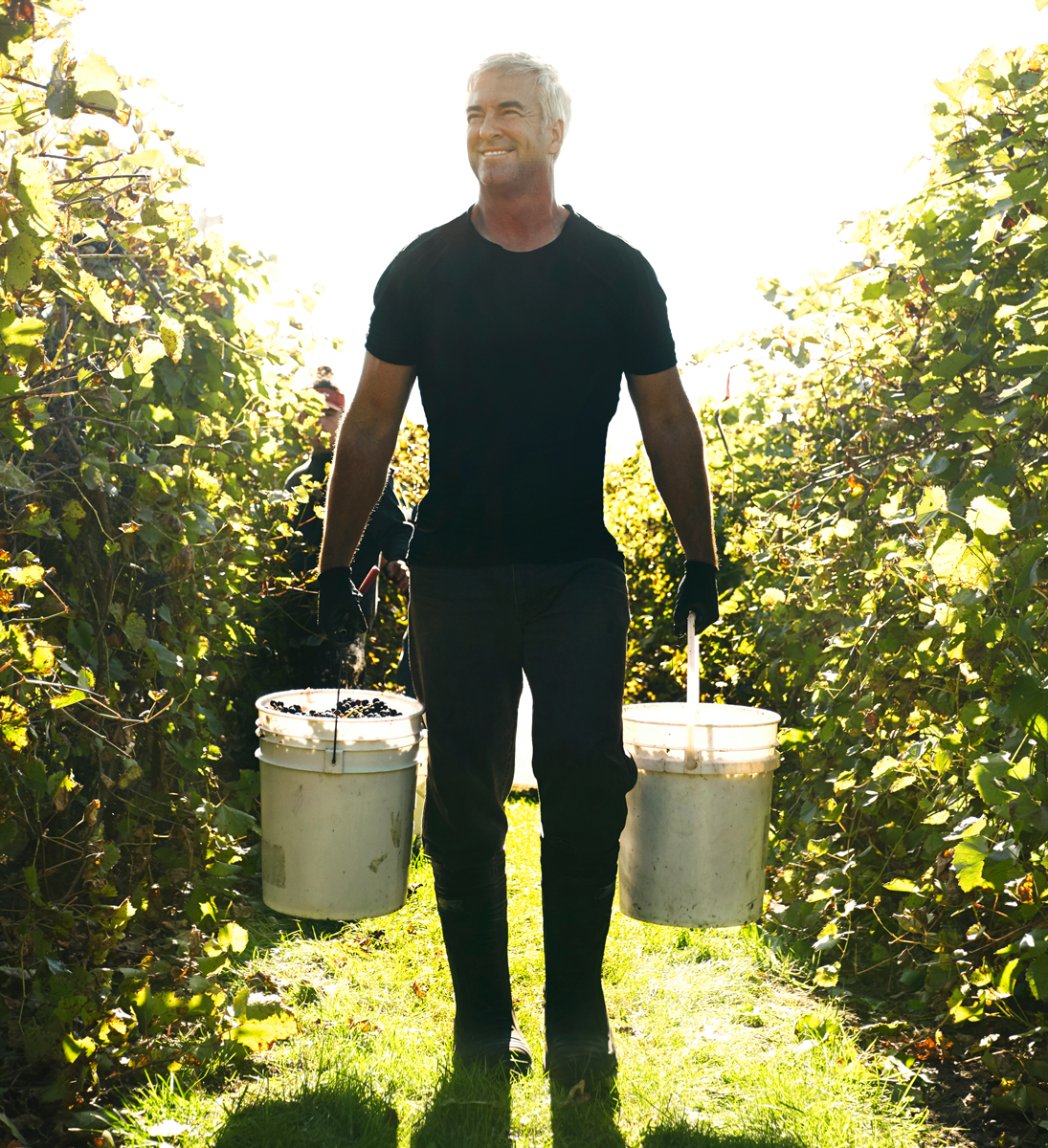
At Potter Settlement Artisan Wines in Northern Ontario, winemaker Sandor Johnson planted the first Marquette vines in Canada. Photo courtesy of Potter Settlement Artisan Wines
Marquette, Osceola, Frontenac, Petite Pearl and Itasca are also helping winemakers establish thriving vineyards in Québec, Prince Edward Island and parts of Ontario that were once written off as too cold for grapes, but are now marginal, such as the Ottawa Valley. There’s even a famous Marquette Grand Reserve known as the “Appassimento from Tweed” that’s helped put this small town on the edge of the Canadian Shield on the global winemaking map.
“I worked with the University of Minnesota to get the first cuttings of Marquette to Canada in 2007,” says Sandor Johnson, winemaker at Potter Settlement Artisan Wines, noting that he’s been recognized by the grape growers of Ontario for having Canada’s first planting of Marquette.
Johnson loves the grape for pushing award-winning viticulture northward but, perhaps even more because he doesn’t have to use any fungicides on his vines. Like many hybrids, Marquette is also disease resistant.
“I’m just a generational caretaker here,” he says. “This is my great, great, great, great, great-grandparents’ farm and I’ve got a two-year-old who’s going to inherit the place. I just want to get away from the stuff that’s poisoning the soil and the water and us.”
Pollution and climate change may be different issues, but it doesn’t take a genius to understand that efforts to stop one are often the very same things that will help curb the other. And, in both instances, hybrids are shaping up to be a big part of the course correction we need to start taking.
“Sometimes I think it’s easy for consumers to focus on the wine as a finished product and not consider how important hybrids are to the whole industry and environment,” says Geena Luckett. “A couple of years ago I thought, ‘Oh my gosh, are we going to be the Bahamas of Canada?’
“But now it’s the extremes and the fact that you have no warning,” she adds. “Whether it’s the polar vortex of a couple of years ago or the fact that, this year, we haven’t seen rain in a long time, hybrids are essential, not just here, but in many regions around the world.”

Magnetic Hill Terroir Generator 2020 Sparkling Marquette
(New Brunswick, $35)
Tight bubbles, great structure and subtle fruit.
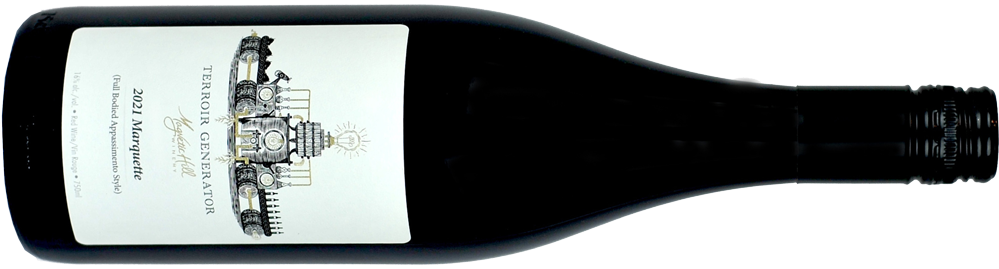
Magnetic Hill Terroir Generator Marquette 2021 Appassimento
(New Brunswick, $45)
Stunning dried fruit in an award-winning wine.
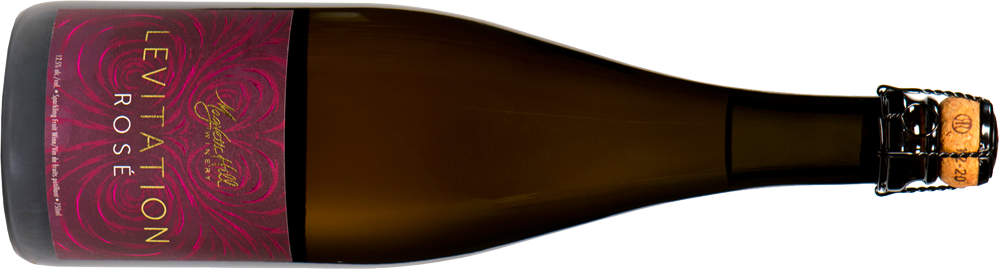
Magnetic Hill Levitation Rosé
(New Brunswick, $35)
An elegant fizz with light, fresh, mild spice.
CHRISTINE SISMONDO is a National Magazine Award-winning writer who covers spirits, wine, bars and cultural history for numerous publications, and is the author of America Walks into a Bar.
CHRISTINE SISMONDO is a National Magazine Award-winning writer who covers spirits, wine, bars and cultural history for numerous publications, and is the author of America Walks into a Bar.
Copyright © 2026 - All Rights Reserved Vitis Magazine